

Partnership Insolvency – Establish your objectives
You will need to establish your objectives before deciding what to do if you partnership faces insolvency.
ReadPartnership Insolvency – Establish your objectives
You will need to establish your objectives before deciding what to do if you partnership faces insolvency.
Read
Partnership Stop Options
If your business is trading as a partnership and it is not viable or insolvent you need to STOP trading. Click one of the links below to find out more
Read
Partnership Go Options
If the partnership IS VIABLE what are the Go Options?"
Below are the options to allow the business to continue trading.
ReadWarning Signs that Banks Will Look For A Sole Trader Rescue
A Bank's View Warning Signs from a Banks perspective - what will your bank look for?All of the signs on the warning signs page and these additional areas will be looked at by your bank. Overdraft Is it constantly at limit? This is called ceiling borrowing. This could mean that the business has simply outgrown its facilities or that it is possibly insolvent. Discuss always being at your overdraft in the context of "What facilities do we need?" AND Am I insolvent?Trend borrowing analysis - what does your borrowing trend show? The bank will look hard at a cycle of events. If the trend is constantly upwards (in terms of money they have lent to you) then there may be a more fundamental problem looming.Returned cheques - if you have written cheques when insufficient funds are available this is a clear sign of insolvency and is also a breach of your contract with the bank. Think very hard before writing cheques in advance of funds becoming available. Other Warning Signs for the bank?Poor management information flow Always asking for new facilities Monthly management accounts delayed Cannot produce forecasts Security of exposure charges - is their enough security? Commitment - are the key people financially and holistically committed? In other words what human and financial capital do they have in the business? Professional advice - taken where required? Spirit of co-operation with the bank Do you miss bank meetings? Banks also examine the following for Risk Analysis Lost contracts Bad debts Refinancing of assets Contractual disputes Insurance Cover SystemsGet too many warning signs and the bank will become concerned.
Read
What is Walking Possession? (Taking Control Of Goods)
'Taking control of goods' is a legal term used by the enforcement department of HMRC to recover goods as a way of debt repayment. An HMRC officer will first issue a Notice of Enforcement to recover debt (after receiving a Writ of Control).
Read
Informal Deal with Creditors for Company or LLP Lawyers – Plan A
Are you a firm of very worried solicitors? Is your legal practice in a company or LLP and under growing pressure from all sides? Often cashflow is very poor but we can help you solve these problems, restructure and survive. Informal deals and refinancing for solicitors trading as companies and LLPs Plan A: This is a non formal deal with creditors, coupled with possible refinancing. There is no need for formal insolvency actions such as administration, company voluntary arrangement or liquidation. But it gives no formal protection.Using the threat of the insolvency options can be like the proverbial Sword of Damocles, you can threaten to wind the company up, sell it through administration or possibly go personally bankrupt or enter an IVA but the creditors would get very little back. Surely an informal deal that pays everything back, in full, over a long period is better than writing the debt off?Being prepared to argue with creditors that the informal route means at least some if not all of their debt is recovered and that this approach will allow you to practice in future, is the common sense solution. Solicitors may still be able to practice if in an IVA but cannot when bankrupt.KSA Group will always however make sure that the options of company voluntary arrangement and liquidation have been assessed, a statement of affairs prepared and valuations of any properties obtained to counter the creditors aggression. They may ask “why wait for money what if we simply wind the company up”? question. The main thing to remember is with our help you are well prepared with a statement of affairs and with expert advisors you can often negate their aggressive questioning.Pointing this out bluntly allows us to prepare a plan for the recovery of the creditors monies over a considerable period of time say 8-12 months. Yes even if HMRC has rejected YOUR suggested time to pay proposals., we may be able to get a further TTP in place with detailed work backing it up.We would generally insist on the following work being part of our restructuring brief:Detailed DAILY CASHFLOW we can provide the tools and assess this for the company or LLP. But this MUST be introduced and to help survival you or your admin people must update every day A statement of affairs for the company or LLPs. In our experience this probably requires a desk top valuation of any corporate or individual’s property. KSA agents can will do this confidentially as part of the brief. A sofa sets out asset and liabilities and the likely outcomes in terminal insolvency like liquidation. It doesn’t look good for creditors recoveries which is an all to accurate portrayal of what happens in liquidation. A detailed financial forecast for the solicitors business. This should include “what if scenario planning” ie what if fee income falls, WIP is not all collected for example? KSA led negotiations with the creditors (usually HMRC, trade and the bank) in person and where required in writing led by KSAs experienced debt negotiators. Possible assessment of your personal property and assess possibility of raising new debt from property(ies)This process can be delivered in 1-3 weeks from engagement and is led by very pragmatic experts in this field. Before commencing we will set out the strategy plan in writing. This work is always costed in writing in our unique solutions report which is provided FREE after your first meeting with a KSA director or regional manager. Our fees usually come from cashflow savings that we can create for you as part of this process.What now? If your business has cashflow problems you must act or the creditors will, sooner or later act aggressively against you.A word of warning. If your company or limited liability partnership has relied upon multiple time to pay deals over recent years with HMRC and these deals have regularly not been adhered to, then this first option may not succeed, but we believe it is still worth trying.What if Plan A does not work?Plan B is to propose a company voluntary arrangement paying creditors a dividend (or partial to full repayment)Plan C Liquidation and possible personal bankruptcy if large personal guarantees have been provided.Of course, acquisition by another firm is a possibility too. Will this acquiror pick up all of the liabilities of your firm?
ReadCompany Voluntary Arrangement for company or LLP Lawyers – Plan B
We are a firm of very worried solicitors. Our legal practice is a company or LLP. We are under growing pressure from all sides. How can you help us solve these problems, restructure and survive? There are three options to deal with severe cashflow problems, this page looks at Plan B company voluntary arrangements (CVA)A CVA could be the answer to your company's problems and could even help protect you personally from your creditors. But it is a risky approach and possibly very damaging to your company credit rating. A hive down may resolve this credit rating issue, ask us for details.A CVA is a powerful insolvency tool that will ringfence your company creditors (that's all your unsecured but typically not the secured debts) and it can quickly take away the creditor pressure. It is acceptable to the SRA and in our experience the SRA will want to be informed but will not intervene.Many law firms have significant tax and trade debts. By ring fencing tax / trade debts and repaying them in full or in part over say 12-60 months this can have a major impact on cashflow allowing the company to survive immediate winding up threats, reduce fixed costs and people costs, it will usually be acceptable to the SRA and leaves the directors or designated members of a LLP in CONTROL of their business.If the directors believe in the fundamental viability of the practice and are determined to fight for the business then the CVA is a powerful rescue mechanism that is acceptable to the SRA. But most people are not aware that it can also be a powerful tool or framework for the restructuring of the business.Property leases and employment contracts can be terminated, costs cut and the business re-shaped to aid survival. This can be tough to drive through without the CVA approach. It can also be an emotional challenge for the directors to have to drive, so bringing in turnaround and insolvency experts is vital.KSA Group has turned around hundreds of companies including law firms. We can see the wood from the trees and guide your restructuring programme. CVA Guide It must be understood that this mechanism is not easy; the directors must work hard on a plan to change the business, cut costs and prove they can make the company viable. Above all the directors need to be determined and united to make this technique work.So what is a Company voluntary arrangement (CVA)? See our experts guide to company voluntary arrangements here for a full description, case studies, flowcharts and case law.The best way to think of a CVA is as a deal between the debtor (the company that owes the money) and the creditors; the people or businesses to whom the money is owed.Where the debtor cannot pay off its debts on time or the company is insolvent (for a definition of insolvency click the insolvent) or if your company is under huge pressure then the CVA may be an appropriate solution.Making a payment on a regular periodic basis the company can bring together all of its unsecured debt problems (except where the creditor has security such as a mortgage over property) and get on with their business and their lives. Who should use a CVA? It is imperative that the CVA is only used where the LLP or company is viable or where it has disposable assets that can be turned readily into money in the short to medium term. Using the CVA can allow time to sell such assets for better value than a liquidator or administrator can obtain.If the business isn't viable it should be wound up (see Plan C) as soon as possible and if personal guarantees are a problem, this may lead to IVA or personal bankruptcy for the directors.If the company is behind with PAYE, VAT and trade creditors then action may be taken by one or more of these creditors. If they petition to wind up the company, the board starts to lose options and lose control.If however the business has never made profit, sales are not rising to the level where overheads start and known prospects aren't great then a CVA is probably not suitable.Above all, time is against you so you must all ACT quickly. Writing the CVA proposal The law envisages that the debtor(s) will write the proposal and then ask an insolvency practitioner to act for the company. Of course the process is complicated and you have a business to run. Therefore it is probably best to use experienced, pragmatic and respected Turnaround practitioners such as KSA Group to write the proposal. Regardless of whom you use the following points should be remembered:1. Base it on sensible cashflows, sales and costs. Don't guess, don't expect large increases in fees.2. Expect that things in the first year will be a difficult and that fees may indeed fall.3. As a result expect to suffer in the first year and do not promise to make large payments in the first year.4. Don't promise too much but as above make sure it repayments are affordable. CVA Proposal contents The proposal should include a description of why the business has failed and why it is insolvent. It should also detail what the structure of the CVA deal is and how the creditors are going to be repaid. To help the creditors decide whether to accept the CVA it must contain what is called a statement of affairs. Or SOFA for short.A SOFA paints a picture of your financial position and demonstrates that the company is insolvent. It will also show what would happen if the company was wound up and went into liquidation and what the outcome would be if the CVA were approved and successful. Of course the risk of SRA intervention means that liquidation may generate NIL return for creditors. SO CVA is a better choice, whilst perhaps Hobsons choice.The document will describe how long the deal is for. Typically most CVAs last between three and five years. And the document will describe how much the company will pay from the business in the months and years ahead to its creditors.After the document has been completed and the nominee (Nominated Supervisor) has reported it can be filed at court. The purposes of this are to ensure that the document that is filed at court is the same document that is circulated to all creditors.BANKS?Occasionally the bank is unsecured in these situations. It may not have a valid security over debtors for example. If so then the bank would be compromised by the CVA. We are currently negotiating with several banks to reduce debt where the bank does have security, but the company is unable to service that debt.Most often though the bank is secured and can appoint its own administrator or receiver. Care must be taken to keep the bank appraised and detailed forecasts provided to show whether the company can operate within the set facilities.Solutions include loan payment holidays, occasionally debt write down, long term debt conversion from overdraft to long term loans. Re-banking with more appropriate facilities and debt write off.CVAs are complex schemes to put together and care must be taken to consider all stakeholders objectives, carefully set out a plan and ensure buy in from creditors.Costs:Our fees usually come from cashflow savings that we can create for your partnership as part of this process. We often take a fee over several weeks and add a success fee if agreed targets are achieved. All fees are quoted in writing.What now? If your business has cashflow problems you must act or the creditors will, sooner or later act aggressively against you.What if neither Plan A or Plan B is suitable?Plan C pre pack administration, or winding up of the companyOf course acquisition by another firm is a possibility too. Will this acquiror pick up all of the liabilities of your firm? Perhaps pre-packaged administration could preserve the business and employment?Call KSA Group's DEDICATED LAWYERS LINE now on
Read
CVA versus Pre packs – The Great Debate
With H.M. Governments Insolvency Service planning yet another review of the current practices regarding pre-packaged administration sales (pre-packs), this thorny subject once again comes under the spotlight. The Insolvency Service estimates that 25 per cent of all administrations are pre-packs, of which around 85 per cent are sold-on to parties already linked to the company.
ReadLiquidation Testimonials
Business services company (creditors' meeting 26th July 2013) My company had been suffering financial issues after a loss of income and was having great difficulty in agreeing a time to pay arrangement with several areas of HMRC.After a particularly stressful period where an inspector had paid successive visits to my house, upsetting my wife and new baby and leaving letters demanding payment, I really did not know where to turn next. I started looking around on the internet to see if there was any help possible and luckily it was then that I came across the KSA Group website. I read through their services and testimonials and decided they may be able to help or offer advice so I contacted them immediately.I can honestly say from the very first phone call a huge weight was lifted off my shoulders. I cannot say how much better I felt after that initial consultation. I felt immediately KSA had the expertise and personnel to be able to help with my particular circumstance.My subsequent meetings with Gary to explore the options available, and finally Wayne to start the legal processes left me feeling much happier about my situation and that I was doing the correct thing. At no stage did I feel unable to ask questions or that my interests were not being looked after. From start to finish I was treated with professionalism and fully supported through the entire process. I cannot say thank you enough for the help I have received from such a fantastic team. Liquidation of an IT company I just wanted to thank you and the team for helping me and indirectly my family through what was a very difficult time, both emotionally and financially. Wayne was fantastic at putting me at ease and throughout the whole insolvency process, it was less stressful than I had first anticipated; many thanks Wayne.I must say the the professionalism and personal touch of the whole team was exemplary. From the first introductory meeting all the way through the final insolvency process. What was a significant factor in my decision to assign KSA Group was the feedback given by previous clients and the sensitive way in which my case was dealt with because the circumstance leading up to the difficult decision to apply for insolvency were extra ordinary. My deepest thanks to everyone and as promised I will ask the wife to bake some special KSA Group class cupcakes for the team to enjoy which I will deliver personally.Many many thanks...Kindest Regards, AP
Read
A Guide to Investigating Accountants
If your business is performing poorly and your lender is worried then they may send in investigating accountants to do an independent business review.
Read
Advice from Family and Friends
Health Warning for Directors - Well-Meaning Advice from Friends and Family This page has been difficult to write because all too often we see that directors of companies turn to members of their family for advice when they realise that their business is in a tricky financial situation. Unfortunately this advice is quite often completely wrong and potentially damaging.Family members offer advice about what to do but they are too close to the situation and, to be honest, are unlikely to have any actual expertise or experience of how best to act when a business is facing severe financial difficulty. All too often, family members and loved ones will tell directors what they want to hear!The danger is that directors in a stressed frame of mind will not necessarily act rationally and such advice from family reinforces the illogical thinking. What’s more, friends and family may not have the same exposure personally and therefore actions taken probably won’t affect them as much. So what sort of poor advice are we talking about? Borrow more money!Often money is seen as the cure. Of course, normally the people who advise this are not the ones having to guarantee the loans! Most loans direct to businesses often need to be personally guaranteed. Is more money the answer? Really? You have to look at the reasons why the business is running out of money? It might be the fact that the director(s) are incompetent on the financial side and need help. Fancy saying that to your nearest and dearest?Just put more personal money inThis advice is better than borrowing money but only if you can afford to! Remember that any money that is put in to a struggling business is at serious risk. Take out security if you’re prepared to put more money in. It costs a little bit more as you will have to register a debenture at companies house but if the company fails then you will rank above trade creditors and HMRC when it comes to getting paid.You will be disqualified if the business failsThis is completely wrong. Only if you have been fraudulent or deliberately misled creditors knowing the business is going to fail will you face disqualification or be personally liable for the debts (note that if you have personally guaranteed loans then yes you will be liable ). This worry tends to make directors “freeze up” and take no action out of sheer panic.You can’t be a director again if the company fails – Completely wrong again (see above).Your credit rating will be shot if the company goes into liquidation – Only if you have personally guaranteed loans to creditors and are unable to pay (see above about taking on more debt). Know the difference between creditors voluntary liquidation and compulsory liquidation. A compulsory liquidation will look worse on your record than a voluntary one if an extended credit check is done (sometimes these are requested if you are working in defence, financial services, insurance and other sensitive areas).You must pay creditor X before creditor Y This is a minefield. Paying one creditor over another can be construed as granting a “preference” and can be reversed by the court or a liquidator if the business fails as a result of the preference or it was insolvent at the time. What is more this can still happen up to 2 years after the transaction.Move some of the assets to another company for a £1 and start again?Careful as any transaction that is not deemed to have been done at fair value can be reversed by the court. In fact there are lots of Insolvency Practitioners who make a living getting these cases to court on behalf of creditors that feel they have been stitched up.HMRC will not negotiate and will just wind the company upHMRC enforcement are tasked with collecting 100% of the debt. If this is simply not possible then they can negotiate on a reduced pay out over a period if the company proposes a CVA. This is handled by another department of HMRC ( the voluntary arrangement service ) and they will take the case off enforcement.Don’t do a Company Voluntary Arrangement (CVA) as they don’t workOh really? They are often the only chance that a business has and for the record the majority of them do. The ones that fail are poorly put together or the company has not changed sufficiently to meet the rigours of paying back debts over a 3-5 year period.So if you are close to a director of a distressed business the best advice you can give is GET ADVICE from SOMEONE ELSE WHO IS AN EXPERT!This all sounds quite blunt but we want to help directors. We are currently dealing with a company where the director’s brother gave such poor advice that the director is now likely to lose everything; His house and a £1m business. This inspired me to write this page as a warning to others.
Read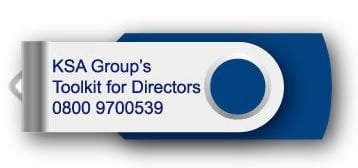
Insolvency Toolkit for Directors
Worried about your business? Concerned it may be failing? Need help fast but don't want to meet anybody face to face yet? Get all of our best guides and expert advice on one USB Drive FREE!This toolkit is available as a discreet USB device ( we do not mention insolvency on the drive itself ). You do not need to be connected to the internet to read all the guides to your options.What does it cover?The tests for insolvency Establishing if your business is viable. How to ask for time to pay your debts to HMRC Extensive guides on pre pack administrations, liquidation, company voluntary arrangements. A guide to all the legal actions that creditors might take and the issue of personal liability. What is an overdrawn directors account and why does it matter. How to raise finance to ease cashflow pressure. Your duties as a director of an insolvent company.Just plug in the drive and you can easily navigate to all the menus.The USB drive also includesDissolution programme with all the letter templates and resolutions. A time to pay programme with all the letters and information needed to ask HMRC for more time to pay VAT/PAYE Daily cashflow spreadsheet to help you budget.Order your free toolkit and start taking action to save your business now. Please email robertm@ksagroup.co.uk to receive your complementary copy in the post.You can also request our FREE 80-page guide for worried directors here. We answer any questions you may have and provide detailed explanations on several insolvency issues.
Read