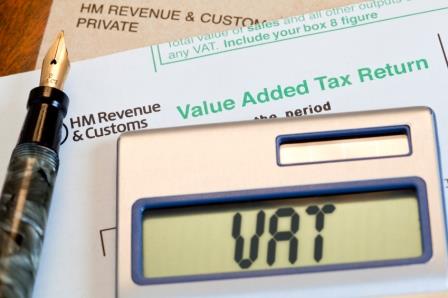
HMRC is one of the most common creditors for UK businesses as it is easier to delay paying VAT than not paying a supplier who your rely on. However, if you ignore the obligation to pay VAT on time the consequences can be severe for both you and your business.
Here, we’ll look at how you can get back on top of your VAT arrears, and continue to run a viable business.
What are VAT arrears?
VAT stands for ‘Value Added Tax’. It’s a consumption tax for the customer and applies to most goods and services that are sold or bought in the EU.
It’s an indirect tax as it is paid to the Government by the seller (business), rather than the person who must pay the tax (the consumer).
According to EU regulations, the VAT rate cannot fall below 15%. In the UK, it currently stands at 20%, although it’s possible to reduce rates on certain items.
However, if the annual turnover of your business does not reach the annual turnover threshold (currently £85,000), you will not have to pay VAT.
Equally, if you’re exporting items outside of the EU or selling them abroad, you may not need to pay VAT.
HMRC is the organisation that collects VAT for the government. In insolvency proceedings, it’s considered a creditor just like any other – even though it’s technically a Government department.
If your company has VAT arrears, it means you have not paid/cannot pay your VAT bill. This indicates severe cashflow issues, or that your company is insolvent.
Note: due to coronavirus, the Government have temporarily reduced VAT for certain supplies of hospitality, hotel and holiday accommodation and admissions to certain attractions, to 5%. This has effect until 31 March 2021. Also, schemes have been set up to support businesses who are struggling to pay back their VAT due to the pandemic. The latest is the creation of a new payment scheme for businesses who deferred paying VAT between 20 March 2020 and 30 June 2020, and are struggling to pay by 31 March 2021. Under this scheme, VAT can be deferred over a longer period. The online service opens on 23 February 2021 until 21 June 2021. Businesses are able to make interest free monthly instalments (up to 11) – the idea being the earlier you join the more months you have to spread the VAT payments across. To join simply go to the UK Government portal site during its opening period.
What happens when you realise you have VAT arrears?
As soon as you realise you’re unable to pay your VAT bill, seek professional insolvency advice as quickly as possible. In doing so, you’ll be presented with options tailored to your situation, to help you avoid VAT surcharges.
Take action early enough, and this will be proof that you acted appropriately as a director. This is important, as you could be held personally liable for company debts if you’re found to have acted outside of your creditors’ best interests or have taken part in wrongful or fraudulent trading.
HMRC takes late or non-payment very seriously, so you must pay attention to all communications it sends you.
Unlike other creditors, it does not need to prove validity of debts to take court action against you. This can result in a distraint order, which gives you five days grace to pay your VAT debt or your company assets will be seized.
HMRC could also try to dissolve your company through a winding up petition and compulsory liquidation – a drastic and final move to close down a company.
What are your options?
When you’re in VAT arrears, you have several options open to you. An insolvency practitioner can advise which route is best for your business, but here’s a summary of the key methods you can try:
1. Pay the debt immediately
The best course of action is to pay all the VAT owed as soon as possible. If you make your payment after the due date, remember that you may receive a surcharge if you make another late payment within the next twelve months.
However, we recognise that this isn’t always an option due to cashflow limitations. In this case, you could try emergency funding methods to raise cash, including:
- Asset refinancing
- Emergency credit
- Invoice factoring
- Director loans
2. Start a time to pay arrangement
This is an arrangement between your company and HMRC. A Time to Pay arrangement outlines a repayment plan that allows you to pay your debt in instalments, rather than one lump sum.
In most cases, a Time to Pay arrangement for VAT lasts between six and 12 months, but can be longer for larger debts.
You must initiate these proceedings yourself by contacting HMRC. Do this as soon as you know you’ll struggle to pay your VAT bill.
HMRC will then assess your company’s viability and choose whether to award the Time to Pay arrangement. HMRC will also insist of a direct debit for the VAT. If it thinks you can pay, you must do so immediately. Fail to comply, and it’s likely that HMRC will issue a winding up petition which will mean the company is compulsorily wound up.
3. Consider a company voluntary arrangement
If the company is viable and the VAT payments can be paid over 3-5 years then a company voluntary arrangement could be an option. See this page for more information
4. Go into administration
This is a more drastic measure but administration can protect your company from legal action (such as a winding up petition) by placing a moratorium on your business.
The administrators will take steps to make the company viable once more through restructuring, redundancies, sale of the business or a Company Voluntary Arrangement (CVA).
There are many different approaches to getting rid of your VAT arrears. The best one for you depends on your company and the amount of VAT debt you have. To be confident you’re taking the right course of action, consult an insolvency practitioner.
For tailor-made insolvency advice for you and your business, talk to the experts at Company Rescue today.